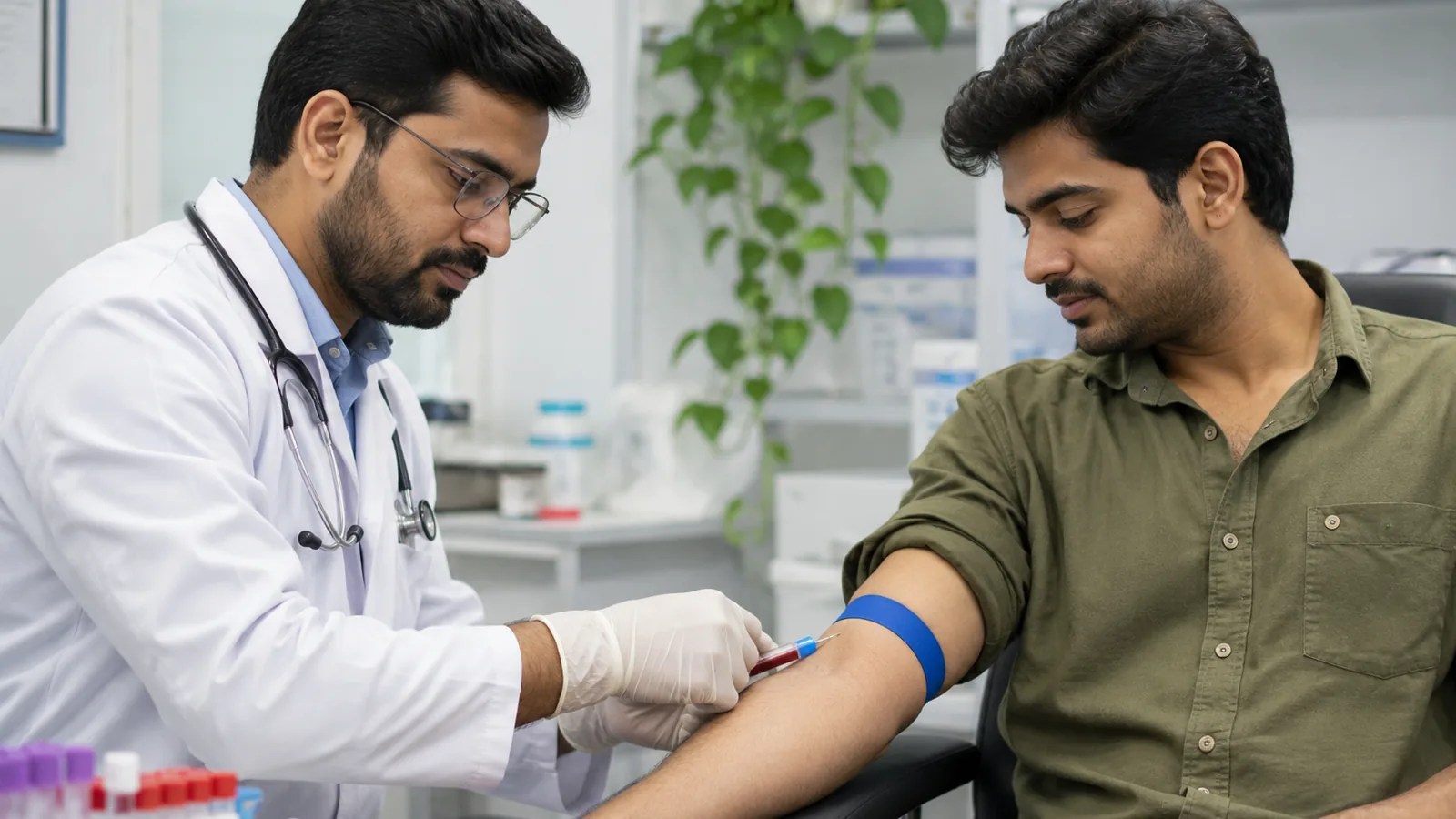
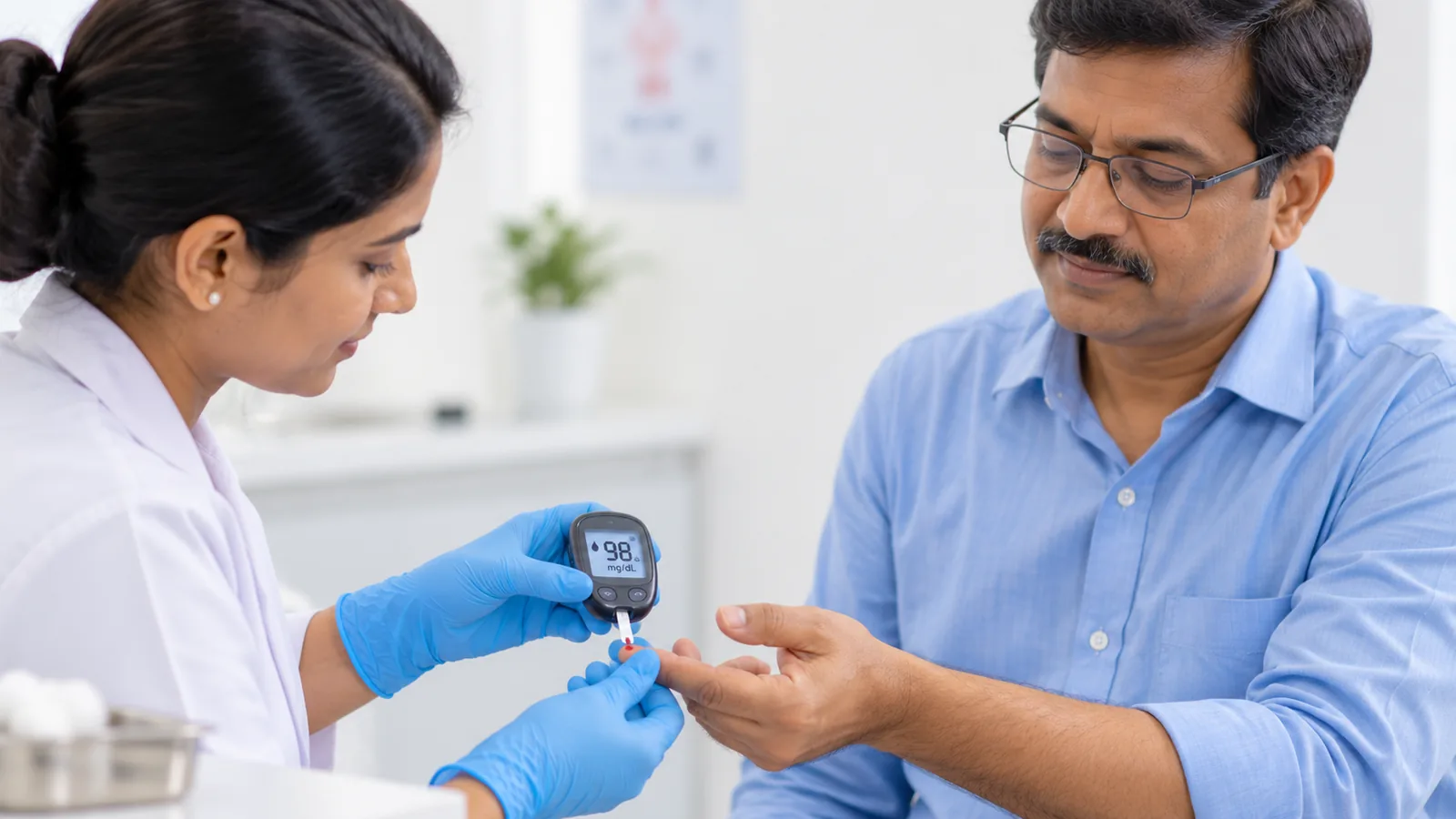
Most people first meet HbA1c as one line on a report: a percentage, sometimes flagged in red, with little explanation. It is one of the most useful blood tests in medicine, because it summarises blood sugar over weeks rather than at a single moment. It is also easy to misread. This guide explains what the number means, how it compares with fasting and post-meal sugar, and the situations in which it gives a false picture. If you want an HbA1c test in Guwahati, UHS Vista runs it in the in-house pathology lab in South Sarania.
What HbA1c Actually Measures
Glucose in the blood sticks to haemoglobin, the protein in red blood cells that carries oxygen. The more sugar in your blood, the larger the share of haemoglobin that gets coated. Red cells live for about 120 days, so the percentage coated reflects your average glucose over roughly the previous two to three months, weighted towards the most recent weeks.
That is why one test can show what several fasting sugar readings might miss. A person can eat carefully for three days before a blood test and still have a high HbA1c, because the test remembers the weeks before.
HbA1c Normal Range and the Diabetes Cut-offs
These are the thresholds most Indian and international guidelines use for adults:
- Below 5.7%: normal
- 5.7% to 6.4%: prediabetes
- 6.5% or above: diabetes range
A single value in the diabetes range usually needs to be confirmed with a repeat test or a glucose test, unless there are clear symptoms along with a very high sugar reading. Your doctor decides this, and it is not something to conclude from the report alone.
What does an HbA1c of 5.9 or 6.0 mean?
It means prediabetes, not diabetes. Blood sugar is higher than it should be but has not crossed the diabetes line. This is the stage at which lifestyle change works best, so it is worth taking seriously instead of waiting for the next number to rise.
Is HbA1c 6.5 diabetes?
6.5% is the threshold for diagnosis, so a confirmed result at or above it is diagnostic. A result of exactly 6.5% on one occasion is normally repeated, and the doctor will also look at fasting glucose and your symptoms.
How does HbA1c convert to average blood sugar?
The estimated average glucose (eAG) is calculated as 28.7 times the HbA1c, minus 46.7, in mg/dL. In practice:
- HbA1c 6% is about 126 mg/dL
- HbA1c 7% is about 154 mg/dL
- HbA1c 8% is about 183 mg/dL
- HbA1c 9% is about 212 mg/dL
Your own day-to-day meter readings may not match these exactly, because the formula describes an average and your sugar rises and falls through the day.
HbA1c Compared with Fasting and Post-Meal Sugar
Each test answers a different question:
- Fasting plasma glucose shows sugar after at least 8 hours without food. Below 100 mg/dL is normal, 100 to 125 mg/dL is impaired fasting glucose, and 126 mg/dL or above on repeat testing is diabetes. Some bodies, including WHO, set the lower limit of impaired fasting glucose at 110 mg/dL, so check which range is printed on your report.
- Post-prandial glucose (two hours after a meal) shows how well the body handles food. Below 140 mg/dL is normal. In a glucose tolerance test, a two-hour value of 200 mg/dL or above indicates diabetes.
- HbA1c shows the long-run average and needs no fasting.
Many people with early diabetes have a normal fasting sugar and a high post-meal sugar, and HbA1c often catches this. Doctors frequently order two of the three tests together for that reason.
When HbA1c Can Mislead
The test measures haemoglobin, so anything that changes red blood cells can distort it:
- Iron deficiency anaemia can push HbA1c up, which may make someone look worse than they are.
- Recent blood loss, haemolysis or a recent transfusion can pull it down.
- Thalassaemia and haemoglobin variants such as HbE, which are common in Assam and the rest of the Northeast, can cause unreliable readings on some methods.
- Chronic kidney disease and some medicines can also affect accuracy.
If your HbA1c does not match your sugar readings, say so to your doctor. A fructosamine test or a continuous glucose monitor may be used instead.
Who Should Get Tested and How Often
South Asians develop type 2 diabetes earlier and at lower body weight than many other populations, so Indian guidelines suggest screening from around age 30, and earlier with risk factors. Consider testing sooner if you have:
- A parent or sibling with diabetes
- A waist above 90 cm (men) or 80 cm (women)
- High blood pressure or high triglycerides
- PCOS, or diabetes during a previous pregnancy
- Symptoms: unusual thirst, frequent urination, tiredness, blurred vision, slow-healing wounds, repeated skin or urinary infections, unexplained weight loss
If you already have diabetes and your control is stable, HbA1c is typically checked at least twice a year. When treatment changes or control is poor, doctors repeat it about every three months. Most adults with diabetes are given a target near 7%, but the right target is individual: older or frail patients, and those at risk of low sugar, are often given a higher one.
Reversing Prediabetes
The most cited trial on this, the Diabetes Prevention Program, found that losing 5 to 7 percent of body weight and walking or exercising about 150 minutes a week cut the risk of developing diabetes by roughly 58 percent over three years in people with prediabetes. Cutting refined carbohydrates and sugary drinks, eating more protein and fibre, building leg muscle, and sleeping properly all help insulin work better. Retest in about three months to see if the number is moving.
Tests That Should Go with HbA1c
If diabetes is confirmed, a full check usually includes a lipid profile, kidney function (creatinine and a urine albumin test), liver function, and a thyroid profile, since thyroid problems are common alongside diabetes. Yearly eye and foot examinations catch damage that does not cause symptoms early on. For more on thyroid results see our guide to the thyroid test and TSH range.
Frequently Asked Questions
Do I need to fast for an HbA1c test?
No. HbA1c can be done at any time of day. If it is combined with fasting glucose or a lipid profile, you will need to fast for those, so confirm when booking.
Can HbA1c fall quickly after diet changes?
It moves slowly. A big change in habits shows up gradually over six to twelve weeks, which is why doctors do not repeat it every few days.
Can stress or an illness affect HbA1c?
A short illness has little effect on it, though it can raise day-to-day sugar. This is another reason HbA1c is more stable than a single glucose reading.
Is a normal HbA1c enough to rule out diabetes?
Usually, but not always. If you have symptoms or risk factors and the HbA1c is normal, your doctor may still check fasting and post-meal glucose, especially if anaemia or a haemoglobin variant is possible.
Get Tested and Treated at UHS Vista
HbA1c, fasting and post-meal glucose, lipid, kidney, liver and thyroid tests are all done in-house at our South Sarania centre, with same-day reporting in most cases. If your report shows prediabetes or diabetes, you can see Dr. Bikash Bhattacharjee, our senior diabetes consultant, or one of our internal medicine specialists on the same visit. We also offer full body health checkup packages that include sugar and thyroid screening. Book your test or call +91 92879 88515.
Visit us: Dwarka Centre, Saniram Bora Road, behind Bora Service, South Sarania, Lachit Nagar, Guwahati, Assam
Timings: Monday to Saturday, 7:30 AM to 8 PM. Sunday, 7:30 AM to 1:30 PM.
Contact: +91 92879 88515 | uhsvista@gmail.com